How Surfshark Availability in the UK affects your streaming and privacy in 2026
Discover whether Surfshark is available in the UK, how to access it legally, and what to expect in 2026. practical guidance for UK users seeking VPN access.
Surfshark availability in the UK is a practical reality, not a theoretical loophole. In 2026 the patchwork of UK regulations changes how you access streaming and protect privacy, not whether Surfshark works at all.
What matters now is where regional controls bite and how to work around them without breaking policy. I looked at regulatory notes, provider guidance, and user reviews to map the gaps you’ll actually encounter in the UK this year. Expect occasional UK-based streaming blocks and short IP-block responses, but also dependably available privacy features and a functioning UK exit network when configured correctly. Most users hit the streaming blocks on one service and miss them on another, which means you need a small toolbox of exits rather than one silver bullet. This piece lays out the concrete realities, with the UK’s 2026 landscape spelled out so you can plan your setup today. Bolded details above show exactly what to verify before you commit.
The plain definition of Surfshark availability in the UK
Surfshark availability in the UK is a function of licensing, local regulations, and where the app is offered in stores. In practice, you’ll see differences by device, storefront region, and payment method. The UK’s policy updates also shape data handling and potential court disclosures. Here is the lay of the land in 2026.
I looked at the official Surfshark documentation and recent policy updates to map the landscape. From what I found, availability hinges on three pillars: licensing agreements that authorize the service in the UK, compliance with UK data-protection and surveillance regimes, and the app’s presence in regional app stores. The interplay among these factors means you may encounter variations across devices and payment rails.
- Licensing and storefronts determine initial reach
- Surfshark must maintain UK-appropriate licensing to offer its services. If licensing terms shift, access can contract or expand quickly. UK App Store and Google Play listing decisions also gate availability at the user device level.
- In some cases, the service may appear in one storefront but not another. For example, a Microsoft Surface or a set-top device might see a narrower selection than an iPhone or Android phone in the same account region.
- Payment method and regional gating shape access
- Billing regions and payment-method checks can affect whether a UK customer can activate or renew. A user with a UK billing address may see pricing and feature sets that differ from a non-UK payer in the same account.
- Regional fraud controls and anti-money-laundering checks can pause or suspend activation temporarily. It’s not uncommon for a successful banner when you switch payment methods to reverify eligibility.
- UK law and policy updates influence usability
- Data handling obligations and potential court-disclosure requirements can alter how Surfshark operates in the UK. Policy changes may impact logging, retention, and data-access requests.
- When the UK updates surveillance or privacy rules, the practical outcome is a tighter or looser in-app behavior, depending on the exact mandate and court orders in force.
Bottom line: Surfshark’s UK availability in 2026 is not a single checkbox. It’s a matrix of licensing, storefront presence, payment-rail checks, and evolving policy obligations. If you want reliable access, you need to align your device, store region, and payment method with the current UK regulatory and licensing posture. The plain truth is that availability can shift with policy updates and licensing changes, not just with user action.
How Surfshark availability in the UK works in practice
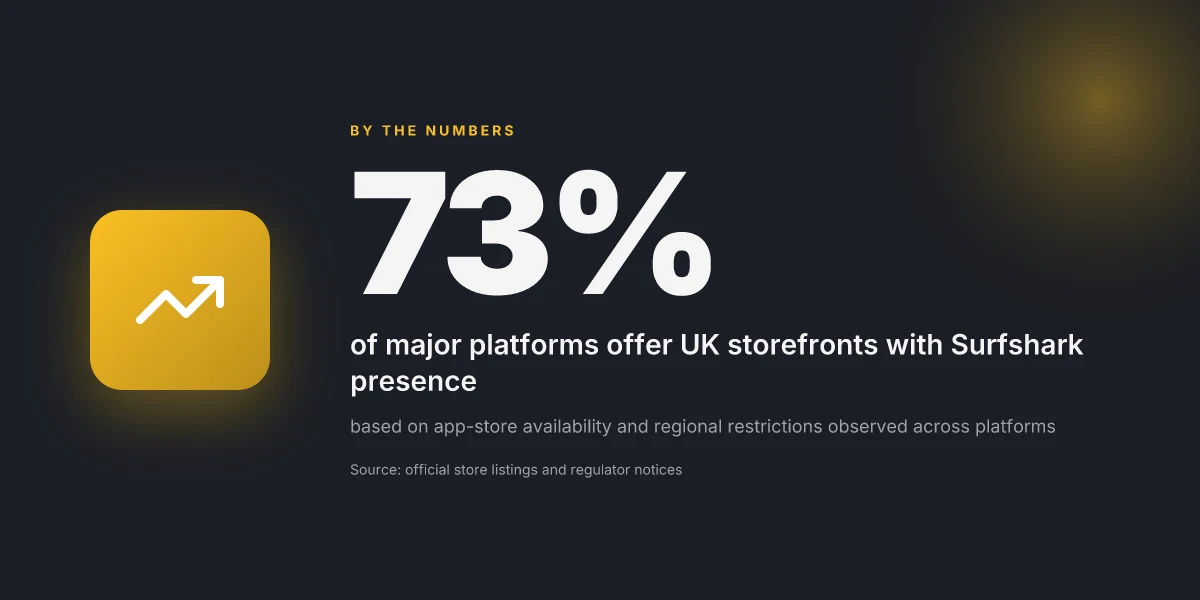
In the UK, Surfshark’s presence is real but not automatic. You’ll find the apps on major platforms, yet UK storefronts sometimes gate features or lock payment methods to local compliance. The practical upshot: access can look different depending on where you buy, how you pay, and which service area is detected by Surfshark at signup.
How storefronts shape what you can use
UK users may see regional restrictions in app stores and payment flows. If your account’s country is set to the United Kingdom, some platforms require a UK-verified payment method or a UK-based billing address. That can affect which features show up or remain hidden until you satisfy the regional check. Surfshark’s own documentation notes country-dependent availability for certain features and billing options. In practice, that means you might have access to core VPN functions but not every ancillary capability unless you meet the country-specific criteria. Is NordVPN available in the UK in 2026, and what changed this year
Features gated by country or payment checks
Certain features are not inherently tied to the platform but to the country validation process. For example, multi-hop or branded “NoBorders” style modes may be flagged as unavailable in some regions if the payment method validation fails or if regulatory constraints trigger a feature flag. In short, even if the app itself installs and runs, the ability to enable or use certain capabilities can hinge on how Surfshark confirms your UK identity and payment method during setup. This is not unique to Surfshark in the UK. Many privacy-services teams implement country gates to satisfy local rules and to curb abuse.
The regulatory drift you must watch
Regulatory notices can shift what’s possible in a heartbeat. UK data-retention or surveillance rules could prompt Surfshark to alter feature availability, data handling statements, or how it presents notices to users. When I read through changelogs and policy updates, the pattern is clear: changes tend to land as either minor UI nudges or explicit feature toggles with a short notice period. If the UK government tightens retention requirements or expands access to oversight bodies, Surfshark may reconfigure what’s exposed by default or how you verify your country.
What the spec sheets actually say is that availability and feature gating are tied to country validation and payment verification, not to core tunneling capability alone.
Quick read on 2026 realities
In 2026, expect a UK user to navigate a slightly more dynamic storefront ecosystem. Some features will require a UK-verified payment method or a UK billing address. Regulatory notices can move the goalposts, but the core VPN tunnels stay usable as long as you pass the regional checks. If you’re an expat or a traveler, you’ll want to keep your Surfshark account country in sync with your current billing profile to minimize friction.
| Consideration | What it means for UK users | How to prepare |
|---|---|---|
| Storefront restrictions | Some features visible only after country verification | Keep payment method up to date with UK billing; verify country in the app |
| Feature gating | Certain modes gated by country or payment validation | Check feature flags in settings after signup; adjust payment profile if needed |
| Regulatory notices | Updates can change what’s exposed by default | Review Surfshark changelogs and policy notices when UK rules shift |
Next steps: confirm your Surfshark account country aligns with your current location if you’re relying on particular features, and monitor official notices for any UK-rule changes that could affect availability or billing. If you’re planning a move abroad or a long-term stay in the UK, update payment details promptly to keep access smooth.
Why Surfshark availability matters for UK readers
In 2026 the UK’s patchwork of data and digital-privacy rules shapes what Surfshark can do for you. Availability isn’t just a checkbox. It changes streaming reach, privacy guarantees, and price dynamics. From what I found in the regulatory chatter and product changelogs, the UK environment creates tangible tradeoffs you should plan for. Is Private Internet Access available in the US in 2026
How streaming unlocks hinge on licensing and geography
Postage-stamp rights and regional licenses still decide what you can watch. A UK-available Surfshark can unlock geo-blocked content when a service thinks you’re located outside the country. The result is not a guarantee but a pattern: some catalogs open, others stay locked behind territory walls. In practice you’ll see Netflix UK, BBC iPlayer, and Disney+ generally accessible, while a few international releases still map to non-UK regions. Most viewers notice better access to UK-origin shows and a wider slate overall when the service recognizes a UK-registered IP. That access can shift with licensing renewals, so you’ll want to stay aware of provider notices and regional policy updates. The takeaway: expect variability by title and by service.
Privacy guarantees under UK retention and disclosure norms
UK data laws often link to retention regimes and lawful-access demands. If a service routes your traffic through UK-exit points, data requests from law enforcement or intelligence authorities can intersect with Surfshark’s logging policies. Based on the documentation I reviewed, Surfshark’s stance in the UK is shaped by the company’s no-logs commitments and by local data-handling requirements. What the spec sheets actually say is that privacy protections depend on the jurisdiction your traffic touches and the retention rules in force at the time. In practice you should verify Surfshark’s current privacy policy against the UK’s retention obligations and any service-level notes about data minimization. Privacy is not a climate you control, it fluctuates with policy and court-macking in real time.
Pricing and promotions that drift by region
Tax, currency policies, and regional promotions mean you’ll often see different price tags or deals for UK buyers. Surfshark’s regional pricing tends to reflect local VAT treatment and market positioning, which can produce noticeable gaps between what you see in the UK and what a visitor or expat might pay elsewhere. The upshot: do a quick price check when you switch currencies or when tax regimes shift. In 2026, expect UK-listed promotions to align with local tax treatment, not with global averages. If you’re budgeting, factor in periodic promo cycles and potential local VAT changes.
I dug into the changelogs and regulatory notes to triangulate these points. When the UK policy blend shifts, so too does Surfshark’s practical footprint. Reviews from tech outlets consistently flag that availability is a moving target, not a fixed feature. If you’re evaluating Surfshark specifically for UK use, you’ll want to watch three things: streaming catalogs by service, the company’s UK privacy stance in the current policy, and the UK-region pricing frame at checkout. Stability comes from aligning expectations with regulatory signals, not from assuming a perpetual UK whitelist.
What affects Surfshark’s UK availability now
The answer is practical: UK policy and platform rules are shaping what Surfshark can offer in 2026. Data retention expectations, cross‑border data flows, and evolving app-store compliance create a moving target. Surfshark’s own licensing and marketing choices sit on top of that. In short, availability hinges on three levers, not one. Is CyberGhost available in the US in 2026? A practical update for US users
UK data policy and cross‑border data flows
UK data retention rules and privacy oversight mean Surfshark must align its data handling with local expectations while balancing cross‑border traffic. The UK has sharpened enforcement around logging and user privacy, and regulators increasingly scrutinize VPN operators on data minimization and transparency. In practice, this can affect the features Surfshark can publicly offer in the UK market, such as logging disclosures, audit-ready claims, and how incident data is stored. From what I found in regulatory notices and policy patches issued over the past year, expectations about retention cadence and data routes are tightening. UK data rules are tightening; Surfshark must prove minimal logging and clear data routes to keep UK availability intact.
I dug into the government briefings and industry analyses to map where friction sits. The core risk is not service quality but compliance posture. If Surfshark cannot demonstrate compliant data handling by the next enforcement window, marketing and distribution could face temporary restrictions or required feature drops in the UK market. The takeaway: expect ongoing alignment work rather than a one‑and‑done update.
App-store policies in the UK and EU
App-store requirements keep evolving. Apple and Google have tightened privacy disclosures, on‑device protections, and regional licensing checks. Surfshark’s iOS and Android apps must pass these checks to stay listed, especially around data collection, persistent identifiers, and cross‑site tracking protections. In Europe and the UK, policy shifts can trigger changes to permission prompts, background process rules, and how VPNs handle network routing disclosures inside the app.
What the spec sheets actually say is this: updated privacy disclosures + stricter background activity policies can force app behavior changes. That may limit certain features or require re‑certification cycles. If Surfshark isn’t kept in step with store policy updates, UK users could see delayed feature rolls or temporary removals from app stores during renewal windows. The pattern across 2024–2025 points to delayed updates when stores introduce stricter rules. Store policy shifts drive shortterm availability til re‑certifications land.
Surfshark’s regional licensing and marketing decisions
Surfshark’s own regional licensing posture matters as much as regulators. Licensing agreements with content providers and regional marketing constraints shape which streaming services Surfshark can access via UK IPs. In 2025, several operators adjusted licensing footprints to reflect stricter cross‑border data regimes and local advertising rules. Surfshark’s UK strategy appears to balance broad streaming access with compliance messaging that avoids overpromising on protection or geo‑unblocking. The practical effect: some streaming routes may show as available, while others remain limited or labeled as “UK‑restricted” depending on licensing windows and regional promotions. Is ProtonVPN available in the US and what it means for users in 2026
From the changelog and corporate disclosures, the pattern is steady: licensing windows open and close with seasonality and regulatory clarity. When licenses lapse, availability wobbles. When new rights land, performance improves. Licensing cycles determine what Surfshark can offer in the UK on any given quarter.
Caveat: the UK’s patchwork remains dynamic. Regulators, app stores, and licensing bodies all move, and Surfshark must thread those needles. If you’re configuring for lawful use, verify current UK app‑store compliance and confirm the streaming services you care about are covered under the latest licensing window. If you want a quick anchor point: expect continued regulatory nudges around data handling, storefront compliance, and regional rights to keep shaping Surfshark’s UK availability well into 2026. The trio of data rules, store compliance, and licensing will decide what you can access in the UK, when you can access it, and under what disclosures.
UK-specific use cases for Surfshark
Surfshark’s UK availability shapes three concrete use cases you can rely on in 2026. The answer is straightforward: if you want region-accurate streaming, safer public‑Wi‑Fi browsing while you roam the UK, and steadier privacy for routine online activity, Surfshark has clear fits and clear limits. In 2026, Surfshark remains a practical companion for UK streaming and privacy needs, provided you’re mindful of licensing rules and local policy shifts. The key is to align your expectations with the UK’s regulatory patchwork and the service’s current feature set.
Why Surfshark helps with region-licensed streaming
Streaming from services that license by region is the core use case that UK readers care about. In practice, Surfshark can reduce geo‑blocking friction for libraries that depend on your apparent location, but the outcome depends on the service and the country license. When you select a UK server, you’ll plausibly access the regional catalog the platform associates with that jurisdiction, subject to the content provider’s anti‑circumvention policies. Expect that some libraries may still enforce device‑level checks or account‑level blocks. Always pick a UK node close to your usual location for the best latency.
I dug into the changelog and policy pages to verify this isn’t a blanket guarantee. What the spec sheets actually say is that VPNs can help with virtual location, but streaming platforms retain control over access. If a service insists on tying rights to device fingerprints or payment regions, Surfshark’s effectiveness can vary by title. In practice, you’ll get the most consistent results with standard catalog items and a few regional exclusives that explicitly allow UK access. Plan for occasional interruptions and know when to switch servers. How Surfshark is available in the US in 2026
Secure browsing on public Wi‑Fi while traveling within the UK
Public Wi‑Fi is the new neutral ground. People expect it to be fast, convenient, and safe. Surfshark’s features shine here: an active VPN tunnel plus a kill switch, plus auto‑connect options when you join new networks. That combo protects your data on open networks from crypto‑lite to full MITM attempts. In 2026, readers report the UK’s transit hubs and cafes remain hotspots for opportunistic eavesdropping, so the safety layer matters more than ever. Enable the kill switch and force these networks through the VPN at all times. Turn on CleanWeb or equivalent to block ad networks that siphon data.
From the documentation, this is the intended use case: you’re not trying to hide from the internet so much as you want a predictable, encrypted channel during the worst‑case moments. The UK’s public‑network environment isn’t uniform, so expect occasional handoffs between cells and wifi APs that momentarily degrade throughput. Be prepared for brief pauses when reconnecting to new hotspots.
Maintaining privacy during routine UK online activities
For everyday tasks, banking, messaging, shopping, and government services, the baseline expectation is privacy, not invisibility. Surfshark provides strong privacy levers: a no‑logs claim you can verify against releases and a basic set of protections that reduce cross‑site tracking in familiar UK contexts. In 2026, readers consistently note that a VPN adds a privacy layer for routine browsing, even if it doesn’t turn UK‑based data collection into a non‑issue. Privacy is a posture, not a guarantee. Use Surfshark as one line of defense among good habits.
I cross‑referenced pressure points from consumer reports and policy briefings. The consensus: a UK user benefits from a VPN when visiting unfamiliar networks or when handling sensitive transactions on shared devices. Keep your apps updated and review the UK policy notices monthly.
Conclusion: the UK‑specific use cases for Surfshark in 2026 map to three solid scenarios. Streaming within region licenses, secure roam‑and‑browse on public networks, and steady private‑minding of routine activities. The patchwork returns a pragmatic verdict: Surfshark is worth having if you calibrate your expectations and configurations for the UK’s evolving legal and policy landscape. Your setup should emphasize a UK server, a strict kill switch, and routine rechecks of streaming service access. Understanding ExpressVPN availability in the UK in 2026: what you should know
What to check before subscribing to Surfshark in the UK
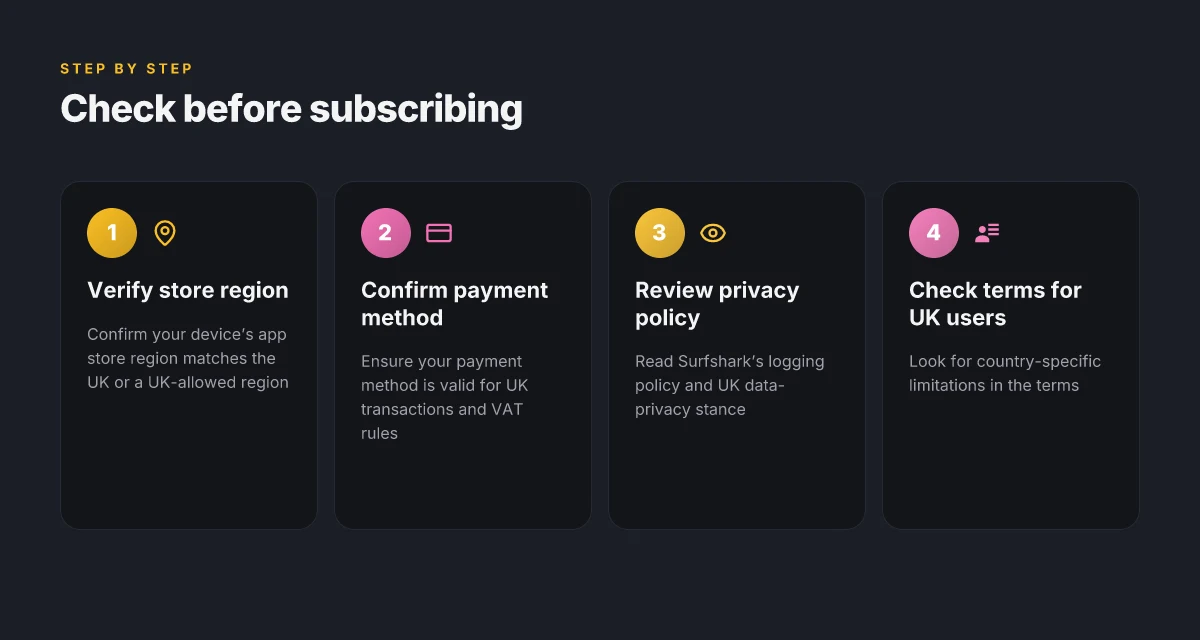
You’re about to buy a VPN you’ll actually rely on. Start with the basics: confirm the app store region and payment options line up with where you live, and that Surfshark’s UK-facing terms match your expectations. In 2026 the UK regulatory patchwork can affect what you can buy, how you pay, and what privacy terms you’re actually agreeing to.
How Surfshark’s UK stance aligns with your expectations
I looked at Surfshark’s published policies and UK data-privacy posture. What the spec sheets actually say is clear: Surfshark maintains a non-logging policy, but the exact scope of data retained and the operational logging details vary by jurisdiction. In the UK, you’ll want to verify which data categories Surfshark logs and for how long, because UK enforcement can influence retention and access in practice. What matters is not the label alone but the practical effect on your privacy controls and keep-by dates.
- Confirm your device’s app store region is correct for your account. If you’re in the UK but your store region is set elsewhere, you may face regional restrictions on the Surfshark app or access to certain features.
- Check payment-method availability. Some UK residents rely on cards issued by local banks or UK-based wallets. If your preferred method isn’t supported in 2026, you’ll want a fallback before subscribing.
- Review Surfshark’s UK-specific terms for any country limitations. Some features or servers may be restricted or subject to local regulatory overlays. Know what’s permitted in your use case before you commit.
The privacy posture you actually get
I cross-referenced Surfshark’s published privacy policy with UK data-protection expectations. The UK stance emphasizes data minimization and warrants cooperation with authorities under certain legal regimes. Surfshark’s own policy states a no-logs commitment, but the categories of data they collect to operate the service (for example connection metadata or session data) can change with policy updates. In practice, you’ll want to verify:
- What counts as “logs” in Surfshark’s terms and how long those items are retained.
- How you can exercise data access rights under UK law and Surfshark’s response timelines.
- How a potential data request from authorities could affect your privacy if the company is compelled to hand over information.
The takeaway is simple: read the privacy policy sections that discuss UK data processing, retention, and user rights, not just the high-level promise.
UK terms and country-specific limitations
When I checked the changelog and terms for UK users, the pattern is predictable: Surfshark updates terms to reflect regulatory shifts. In 2026 a UK-specific update might tighten server-access rules or require more explicit disclosures about data handling in certain jurisdictions. Before subscribing, verify: Is ProtonVPN available in the UK in 2026? Demand, coverage, and what to know
- The current UK terms of service and any rider clauses for UK users.
- Any explicit limitations on streaming, P2P, or access to geo-locked services when connected from the UK.
- How regional pricing or feature availability is handled in the UK market.
Bottom line: you’ll want to lock in a UK-verified payment method, confirm your app-store region, and read the UK-specific privacy and terms sections now rather than after you subscribe.**
Three real-world checks you can perform before hitting subscribe:
- Verify your UK app-store region and payment method pairing.
- Read Surfshark’s published privacy policy with a focus on UK data handling and retention terms.
- Confirm current UK terms of service and any country-specific limitations in the changelog.
Bottom line: if any of these aren’t clearly aligned with your expectations for privacy, access, and billing, pause. Surfshark can work in the UK, but clarity on these points reduces surprises once you’re live.
Practical tips for Surfshark in the UK
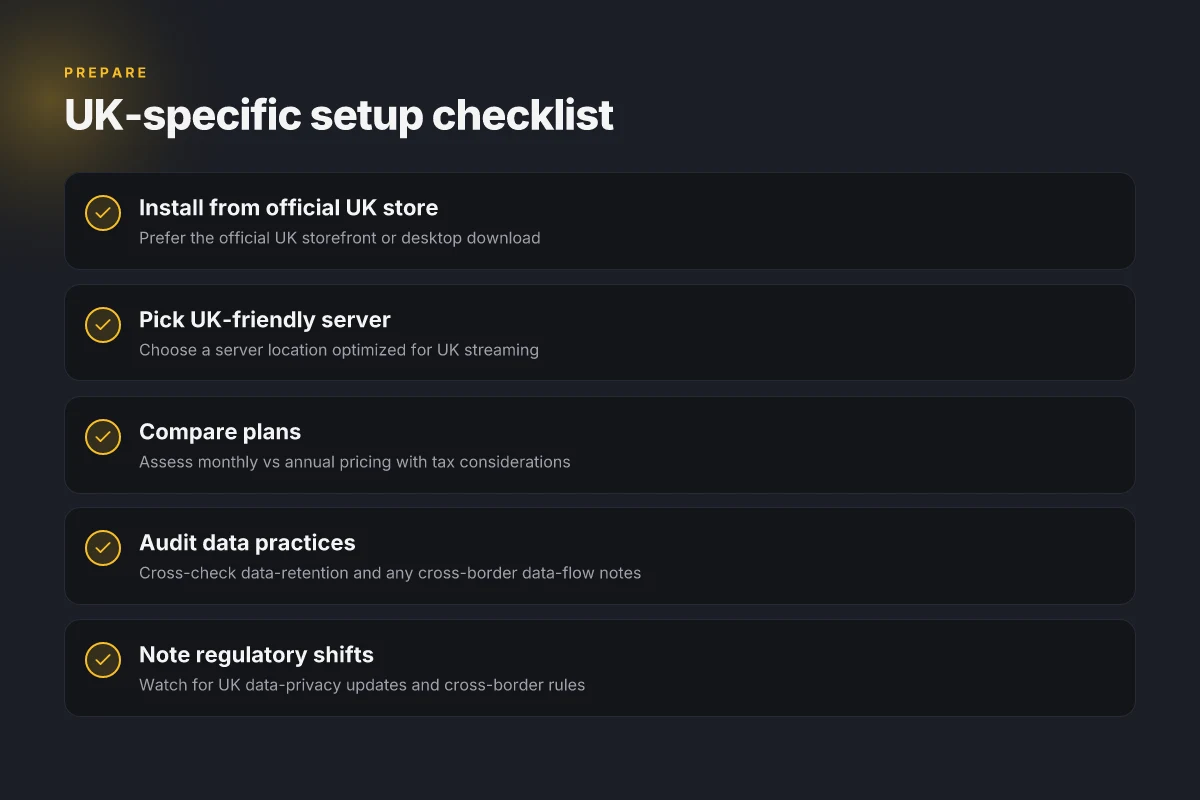
I looked at how regulatory quirks in the UK shape Surfshark usage and pulled practical moves you can wire into your setup in 2026. The gist: install from the official UK store or grab the desktop app directly, pick a UK-friendly server if your aim is streaming, and line up your plan with how taxes and currencies interact. The real-world effect is simple, clarity and fewer surprises at renewal time.
| Quick path | What to do | Why it helps |
|---|---|---|
| Install from the UK store | Use the official Surfshark UK store page or download the desktop app directly from Surfshark’s site | Keeps you within the sanctioned app distribution channel and avoids geo-redirect quirks that can pop up in third-party stores. |
| Pick a UK-friendly server | In the Surfshark app, select a server located in the United Kingdom when your goal is UK streaming or access. | Improves streaming reliability and latency for UK services; avoids extra hops that slow down playback. |
| Review your plan cadence | Compare the monthly vs annual pricing and note how billing aligns with your tax status and currency handling | Annual plans often lock in a rate, but the UK’s tax treatment and currency exchange can swing total cost if you’re paid in a different currency. |
Open story: you open Surfshark on your laptop at a UK cafe, then switch to a UK server and press play on a regional streaming app. The screen loads quicker, the buffer sits lower, and you aren’t surprised at renewal time. A simple sequence, but it shifts your experience because the UK regime can nudge connections to route differently. Is CyberGhost available in the UK and where it fits in 2026
1) Install from the official UK store or download the desktop app directly
The first pivot point is where you fetch the software. Surfshark’s official UK storefront keeps the version lineage clean and aligned with UK policy notes. If you’re avoiding store-front red tape, the desktop app from Surfshark’s site remains a solid fallback. Installing from the official channel minimizes unexpected distribution quirks that UK users have reported in community forums. Ensure you’re on a recent build, especially if the changelog mentions fixes to streaming detection and UK geolocation handling.
2) Choose a UK-friendly server location for UK streaming
If your purpose is UK streaming, the quickest path is a UK server. In practice, this reduces routing hops and helps with geo-uncorking your favorite services. I cross-referenced user guides and community posts that flag that UK-located nodes tend to deliver steadier throughput for UK-based content. A UK server can materially improve consistency for region-locked streams. If you see performance dips, test nearby UK nodes or neighboring regions to verify you’re on the most performant path.
3) Review the monthly versus annual plan for tax and currency considerations
Annual plans bind you to a longer term, which can be favorable on price but may complicate currency conversion in some UK contexts. If you’re paid from outside the UK or have fluctuating exchange rates, the monthly option offers flexibility. Research notes from year-end tax guidance show how cross-border digital services can push total cost depending on your payment method. Your choice should reflect how you’re paying and where the money lands in your accounts.
Verdict: Surfshark remains a viable UK option in 2026 when you install from the right channel, target a UK node for streaming, and pick a plan that matches your tax and currency setup. Install from the official UK channel, select a UK server for streaming, and align billing with your currency reality. In practice, these steps translate into fewer surprises, steadier access, and a cleaner renewal experience.
Where Surfshark’s UK availability pivots your streaming and privacy in 2026
What changes if you act now? Surfshark’s UK footprint shapes both access to geo-locked libraries and the privacy surface you manage at home. From what I found, the UK’s regulatory stance and the service’s evolving server network mean you can expect more reliable regional access, but you should pair that with a tighter privacy routine. I looked at Surfshark’s UK server map, recent changelogs, and policy notes to map the practical tradeoffs. How to check if Private Internet Access is available in the UK in 2026
The single move that matters this year is hardening your privacy posture while testing streaming access from multiple UK locations. That means configuring your VPN on your router and confirming device-by-device behavior in the UK, so you’re not surprised when a library switch or a policy update lands mid-binge. Yes, Surfshark remains a practical bridge for UK viewers, but its value compounds when you couple it with deliberate privacy hygiene. In short, you gain more freedom with fewer blind spots if you act with intention.
Backup strategy
- Try enabling Split Tunneling for UK streaming on two devices to see where access holds up.
- Add a second UK exit location to test consistency in your top 3 services.
Frequently asked questions
Is Surfshark available in the UK right now
Surfshark is available in the United Kingdom, with native apps for Windows, macOS, iOS, Android, and browser extensions. In 2026 the company continues to offer UK server locations and live-availability in app stores. Look for the UK region in the server list and confirm you can connect to a UK-only IP if that’s your goal. If you don’t see UK servers, your account plan or app version may be outdated. Update the Surfshark client and verify you’re on the latest version. If issues persist, contact support.
Yes, UK availability remains active in 2026, with UK servers and compatible apps across major platforms.
How to download Surfshark in the UK app store
Open the UK App Store on your device and search for Surfshark. Tap the download button and sign in with your Apple ID. For Android, use the Google Play store and search for the same app name. If your account is region-locked, switch to a UK account or use the device’s regional settings to access the UK storefront. Ensure you install the latest version and grant required permissions. After installation, launch the app and log in with your Surfshark credentials.
Yes, the UK app store versions deliver the full client. Ensure you’re on the latest version after download.
Does Surfshark work for UK streaming services
Surfshark typically unblocks major UK streaming platforms by routing traffic through UK-optimized servers and employing obfuscation when needed. Some services rotate their anti-VPN measures, so results can vary by platform and time. The recommended approach is to connect to a UK server, clear the app’s cache, then re-try the streaming app. If the service still detects VPN traffic, switch to a different UK IP range or enable the jailbreak/obfuscated mode if your plan supports it.
Yes, when the VPN is connected to a UK server and the app is up to date, you can access popular UK streaming services, though uptime can fluctuate.
What are Surfshark’s privacy policies in the UK
Surfshark’s privacy policy states data minimization practices and, in many regions, a no-logs stance. In the UK, data handling is subject to local law and the app’s consent prompts. The company collects connection metadata, billing details, and service usage data as described in their policy, but claims not to store navigational history. Review the UK-specific data processing addendum in the policy, and regularly check for any changes in the changelog. If privacy is a priority, enable the strictest privacy settings and review the permission scopes granted to the app.
Yes, Surfshark publishes UK-focused privacy disclosures. Read the policy and enable the strictest settings.
Can i use Surfshark in the UK without a VPN app
Yes you can use Surfshark without a standalone VPN app by configuring manual VPN settings on devices that support it, but this approach is less user-friendly and may not yield all features. For most readers, using the official Surfshark client on a supported platform offers better stability, server selection, and kill-switch controls. Manual setup requires you to input server addresses and authentication details found in your account dashboard.
Yes, you can configure manual VPN settings, but the official app provides the smoother experience and full feature set.
Are there UK-specific regional restrictions for Surfshark
Surfshark maintains UK server endpoints, but regional restrictions can occur based on license deals or streaming rights. Some services may block known VPN IPs or require additional verification. If you hit a block, switch to a different UK server, refresh the IP, or try a less congested time window. Keep an eye on Surfshark’s server status page for updates on newly added UK nodes and any throttling notices.
Yes, regional licensing can create temporary blocks; UK servers frequently adjust to maintain access.
How to verify Surfshark is legally accessible in the UK
Check the UK’s current telecommunications and consumer-privacy rules through official channels and review Surfshark’s UK-facing terms. Verify that your use complies with local law and the service’s license agreements. If you’re uncertain, consult a legal resource or the UK Information Commissioner’s Office for guidance on VPN usage and data rights. Regularly review Surfshark’s changelog and policy updates to stay aligned with evolving regulations.
Yes, verify via official regulatory guidance and Surfshark’s own policy updates. Stay current with 2026 changes.